Generic vs. Original (Brand-Name) Medicines: What Kenyan Patients Really Need to Know
SOM · 29 July 2026
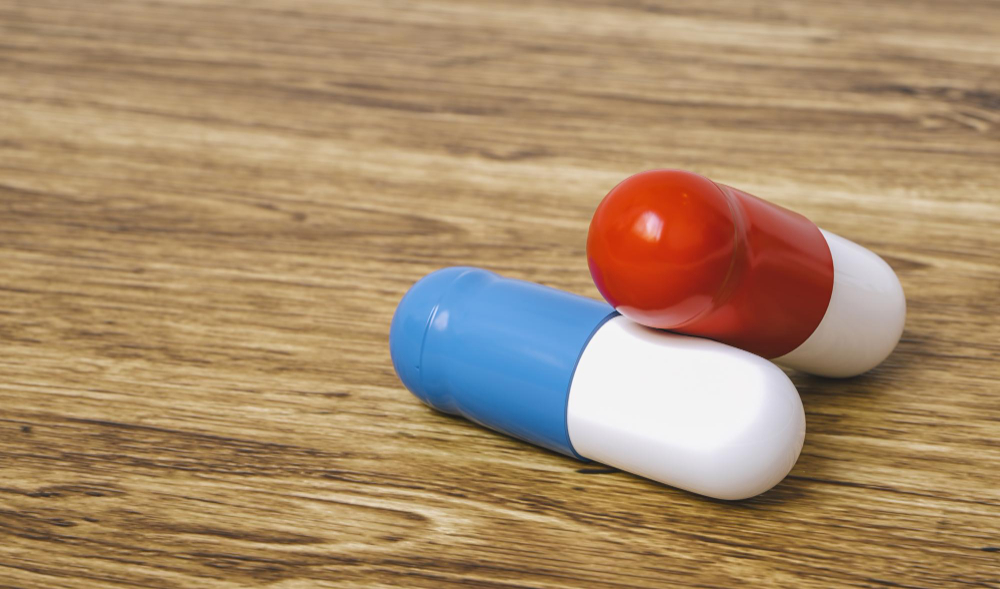
It's one of the most common questions we get across our pharmacy and hospital partners — a patient at the counter, prescription in hand, asking: "Is the generic one just as good, or should I pay more for the original?" It's a fair question, and an important one, because the answer affects both health outcomes and household budgets across Kenya every single day.
Let's settle it properly — with the science, the regulation, and the real risks that actually matter.
First, Let's Get the Terminology Right
A pharmacist at Kenyatta University Teaching, Referral and Research Hospital (KUTRRH) makes an important clarification that's often missed: the word "original" isn't actually the correct pharmaceutical term — the proper word is innovator¹. The innovator brand is the first version of a drug developed by the company that discovered the molecule, ran the clinical trials, and holds the original patent. Once that patent expires, other manufacturers are legally allowed to produce the same molecule — provided they follow the same scientific standards as the innovator. That's what we call a generic¹.
So a generic isn't a copy in the sense of an imitation — it's a legally and scientifically sanctioned version of the same medicine, made once the original company's exclusive rights have run out.
Are They Actually the Same? Here's the Science
At the molecular level, both innovator and generic medicines are required to contain the same active pharmaceutical ingredient (API), in the same strength and amount¹. What can differ is the inactive stuff — the coating, colour, binders, or flavouring — none of which affects how the drug treats your condition.
To prove a generic works the same way in the body, regulators require bioequivalence testing. In practice, this means comparing how much of the drug reaches the bloodstream and how quickly, using measures like peak concentration and total absorption over time. Global regulators such as the US FDA require these values to fall within a tightly defined range (80–125%) of the innovator's performance before a generic can be approved².
In Kenya specifically, the Pharmacy and Poisons Board (PPB) has made this mandatory. Under a formal notice on the Commencement of Mandatory Therapeutic Equivalence Demonstration for Multisource (Generic) Medical Products, the PPB requires that all multisource (generic) products manufactured, imported, or sold in Kenya demonstrate therapeutic equivalence before they can be registered³. This is grounded in the Board's legal mandate under Section 3B(2)(b) of the Pharmacy and Poisons Act (Cap. 244) to ensure every medical product meets standards of quality, safety, and efficacy³.
In short: if a generic is properly registered with the PPB, it has already been tested and proven to work the same way in your body as the innovator drug.
So Why Is the Generic So Much Cheaper?
This is usually where the doubt creeps in — "if it's the same, why is it a third of the price?" The honest answer has nothing to do with quality and everything to do with cost structure.
Innovator companies spend years and often hundreds of millions of dollars discovering a molecule, running clinical trials, and securing regulatory approval. That cost is baked into the price of the original drug for as long as the patent lasts. Generic manufacturers don't carry those research and development costs — they're simply producing an already-proven molecule after patent expiry, and competition among multiple generic manufacturers pushes prices down further¹.
As one Kenyan chief pharmacist put it plainly: "Cost does not equal quality."¹ A lower price reflects a different business model, not a lesser medicine.
Where the Real Risk Actually Lies
Here's the part that deserves far more attention than the generic-vs-innovator debate: the real threat to Kenyan patients isn't legitimate generics — it's counterfeit and substandard medicines that have bypassed regulation entirely, regardless of whether they're branded as "original" or "generic."
The numbers from Kenya's own regulator are sobering. Between 2021 and 2025, the PPB recorded 1,413 product quality complaints, coordinated 99 product recalls, and received 32,833 adverse drug reaction reports⁴ — up dramatically from just 651 adverse event reports back in 2011⁵. Since January 2025 alone, the PPB has issued 14 rapid alerts on falsified medical products and closed 200 non-compliant pharmaceutical outlets⁴.
Some of the falsified products caught circulating in Kenya's supply chain have included counterfeit Truvada (an HIV antiretroviral), fake HIV rapid test kits, falsified heparin injections linked to bleeding and organ damage, and even counterfeit cancer treatments⁵. In May 2026, the PPB issued a public alert after a falsified batch of Phesgo — a breast cancer treatment — was found circulating in Kenyan pharmacies, with a batch number that didn't match any authentic record⁶.
This is precisely why the KUTRRH pharmacy team stresses that the real conversation Kenyan patients should be having isn't "generic vs. original" — it's "quality-assured vs. not."¹ A properly registered generic from a licensed pharmacy is safe. An unregulated product — whether it claims to be a generic or a brand name — is the actual danger.
How to Protect Yourself as a Patient
Whether you're choosing a generic or an innovator brand, the questions that actually matter are the same:
- Buy only from licensed pharmacies. The PPB has repeatedly urged the public to "ask, check, and verify" before purchasing, and to confirm a pharmacy's licensing status through the Board's official list⁷.
- Check PPB registration. Every legitimate medicine sold in Kenya should be traceable to a PPB registration record¹.
- Look closely at packaging and labelling. Poorly printed labels, missing batch numbers, or unusual packaging are common red flags¹.
- Don't assume price alone tells you anything. A cheap product isn't automatically inferior, and an expensive one isn't automatically genuine — the price gap between generics and innovators is normal and expected, but a suspiciously cheap product from an unlicensed source is a warning sign.
- Ask your pharmacist. If you're ever unsure whether a specific generic has been proven equivalent to the innovator brand for your condition, your pharmacist can guide you — this matters especially for drugs with a narrow safety margin, where even small differences in absorption can matter clinically⁸.
The Bottom Line
For the vast majority of conditions and medications, a PPB-registered generic will treat you exactly as effectively as the innovator brand, at a fraction of the cost. The science behind bioequivalence testing exists precisely to guarantee this. The real question worth asking at the pharmacy counter isn't "generic or original?" — it's "is this a properly registered, quality-assured medicine from a licensed source?"
At Auramed, every product we stock — generic or innovator — is sourced through licensed, verifiable channels and meets PPB registration standards. If you're ever unsure about a specific medication, our pharmacists are always available to talk you through your options.
This article is for general educational purposes and does not replace professional medical advice. Always consult your doctor or pharmacist about which medication is right for your specific condition.
References
- Willow Health Media — "Same medicine, different prices: Why original and generic drugs work the same in your body," featuring Dr Edward Maina Mbugua, Chief Pharmacist, KUTRRH.
- Quality of Reporting of Bioequivalence Trials Comparing Generic to Brand Name Drugs: A Methodological Systematic Review, PMC/PubMed.
- Pharmacy and Poisons Board (Kenya) — "Notice on Commencement of Mandatory Therapeutic Equivalence Demonstration For Multisource (Generic) Medical Products in Kenya."
- Lawyard — "Kenya Strengthens Medical Product Regulation Against Counterfeits."
- Daily Nation — "How Kenya's fake drug problem is showing up in ordinary homes."
- Kenyans.co.ke — "PPB Flags Fake Phesgo Cancer Drug Circulating Kenyan Market."
- People Daily — "Pharmacy and Poisons Board moves to tighten crackdown on fake and substandard medicines."
- Merck Manual (Consumer Version) — "Bioequivalence and Interchangeability of Generic Medications."